One image.
Three parts.
The Waterloo panorama became a triptych about the machinery, experience and legacy of war.
The collection · 2013 to present
Paintings interpreted through music.
Select a work to enter its story and hear the interpretation.
Every song begins somewhere outside music.
A painting, an image or a story preserved in pigment becomes the first note. This collection presents each song once, with every released version gathered inside its detail view. All reproduced images are public domain or openly licensed. Where a modern source work remains protected, the exhibition leaves the image absent instead of replacing it.
Room I · Five works
A new voice entered the collection. New work stood beside earlier compositions, reinterpreted rather than simply repeated.
Room II · Nine works
The first full-length expanded the collection into war, religion, mythology, Dutch history and human isolation.
The Waterloo panorama became a triptych about the machinery, experience and legacy of war.
Archive · One work
Not every interpretation became part of an official release. It still belongs to the collection.
Room III · Two works
The early collection became darker, drawing from myth and from one of modern art's most direct images of fear.
Room IV · One work
The Face of Death was the first composition. Together with Death and the Maiden and The Raft of Medusa, it formed the original proof of concept.
The method remains
A work catches the eye. Its story opens. Research becomes words, words become music, and an image receives another life in sound.
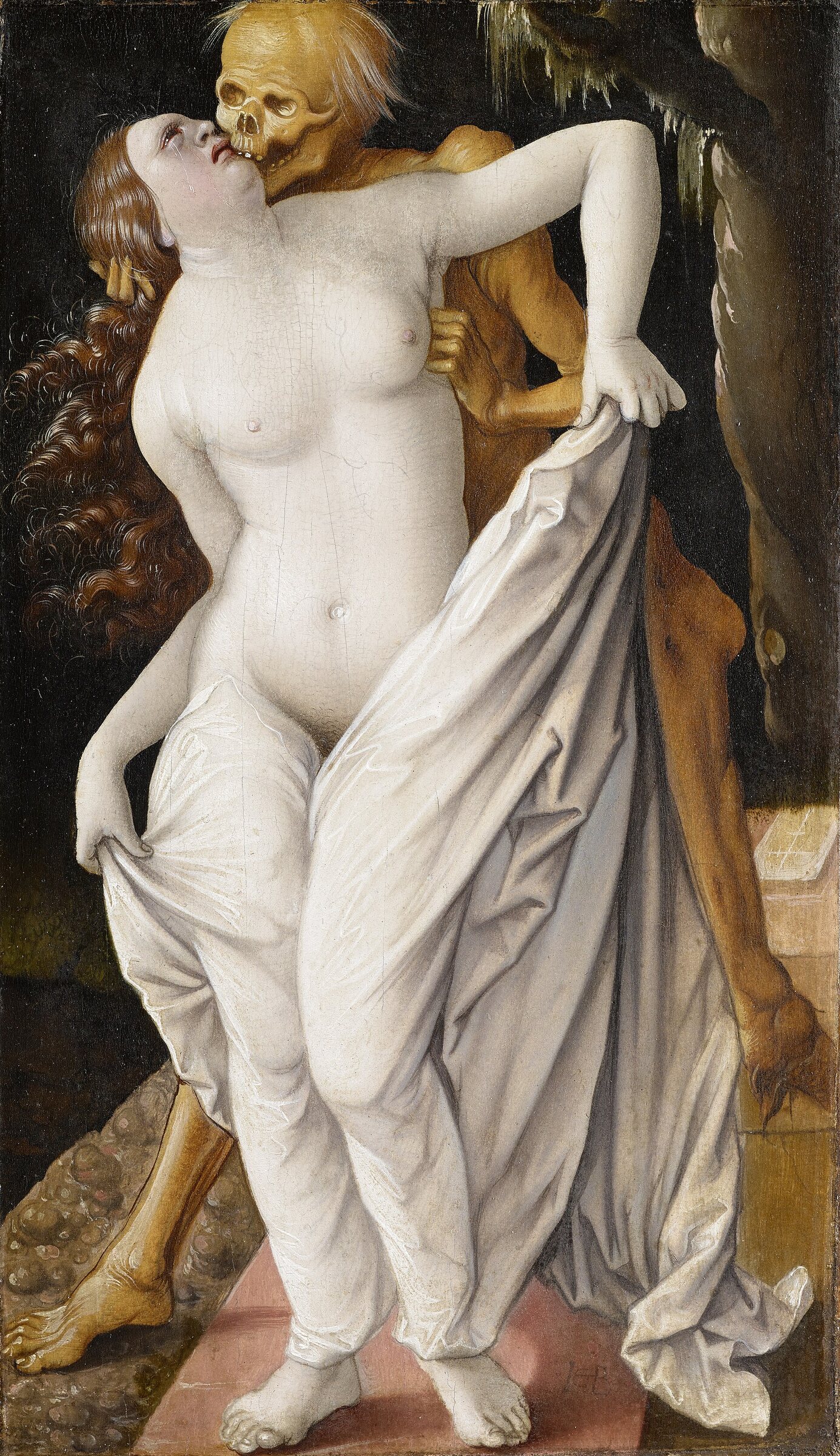
Death and the Woman
Baldung turns the familiar meeting of youth and death into something uncomfortably intimate. Death does not wait at a distance. He takes hold of the woman directly, placing beauty, desire and decay inside the same frame.
The confrontation became one of the first Pictura Poesis compositions. Its return in 2022 was not only a new recording, but a test of whether the original idea could still speak through the band's present sound.
Artwork image: public-domain reproduction via Wikimedia Commons.
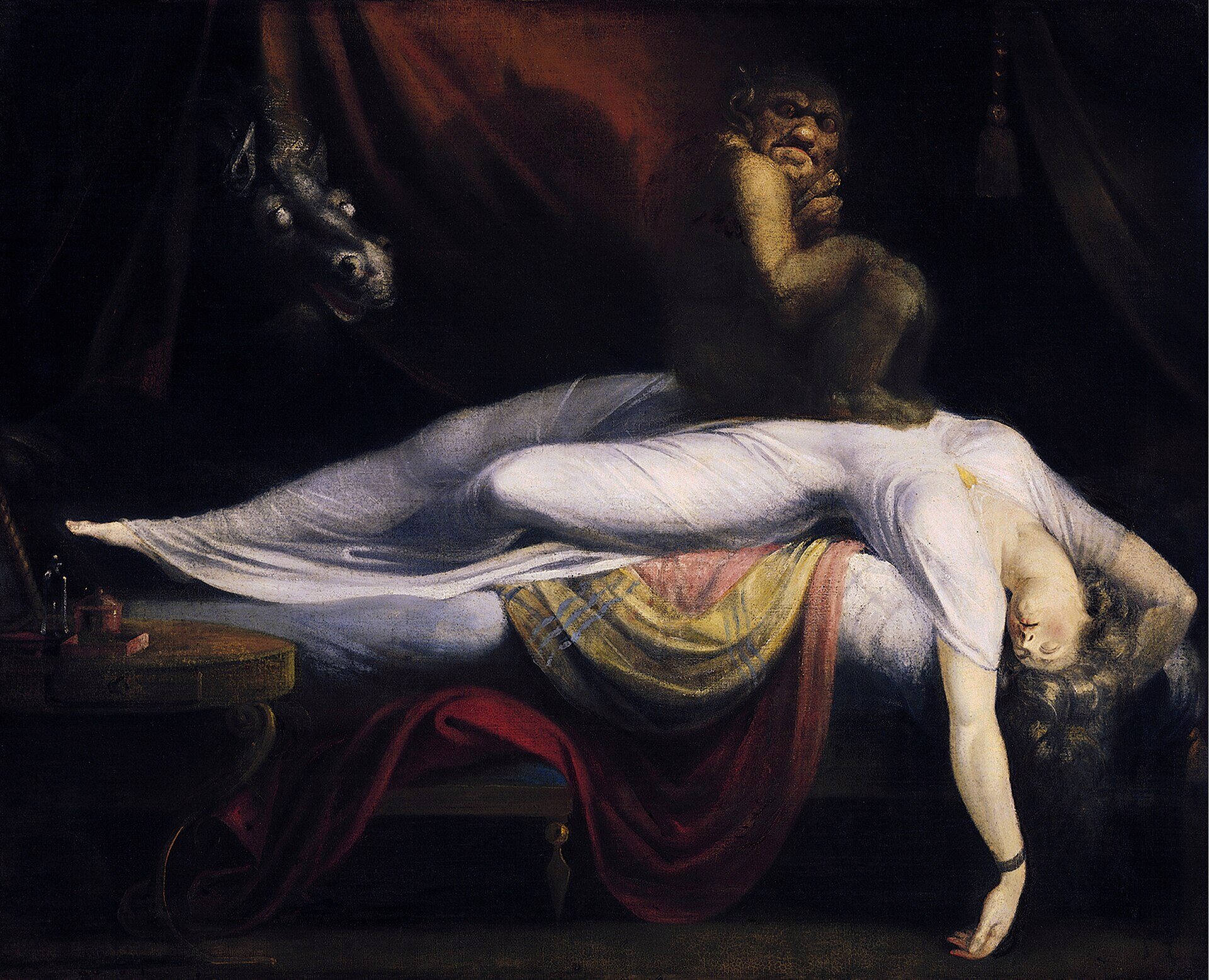
The Nightmare
Fuseli gives a physical form to the terror of sleep. An incubus sits on the woman's chest while a horse emerges through the darkness, joining dream, paralysis and intrusion in one theatrical scene.
The song follows the moment when sleep stops offering escape. The painting's still body and impossible visitors became a foundation for music that shifts between suspended unease and sudden force.
Artwork image: public domain via Wikimedia Commons.
Context image, not Bacon's painting
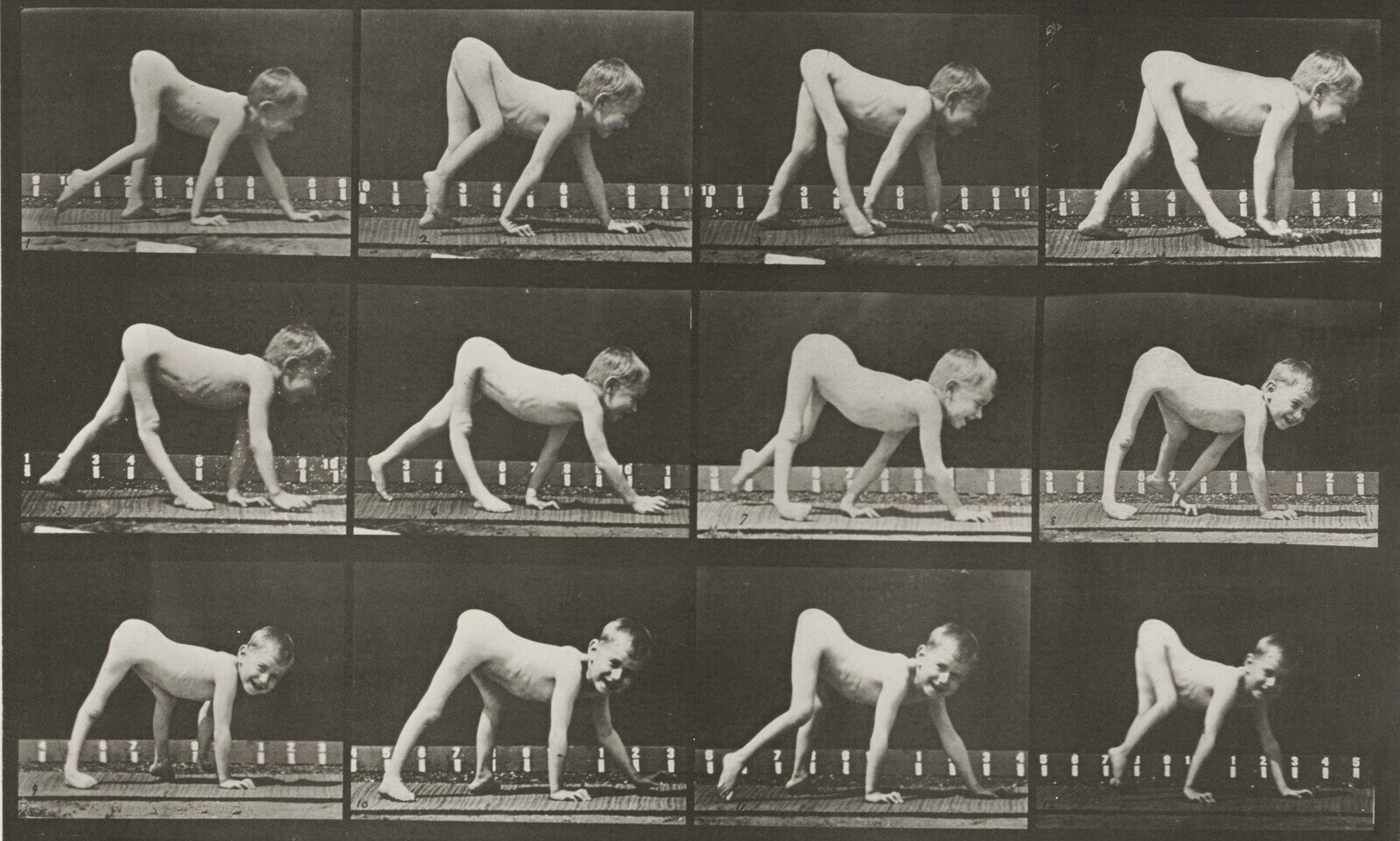
Paralytic Child Walking on All Fours (from Muybridge)
Bacon drew on Muybridge's sequential photography of a child moving on hands and feet. The body becomes both observed motion and exposed flesh. Bacon's painting remains under copyright, so this exhibition shows the public-domain photographic source instead.
The image suggested a conflict between movement and limitation. The song does not narrate the painting literally, but takes its strained physicality and vulnerability as a point of departure.
Context image: Eadweard Muybridge, Animal Locomotion, plate 539. CC0 image from the National Gallery of Art. Francis Bacon's 1961 painting is not reproduced.
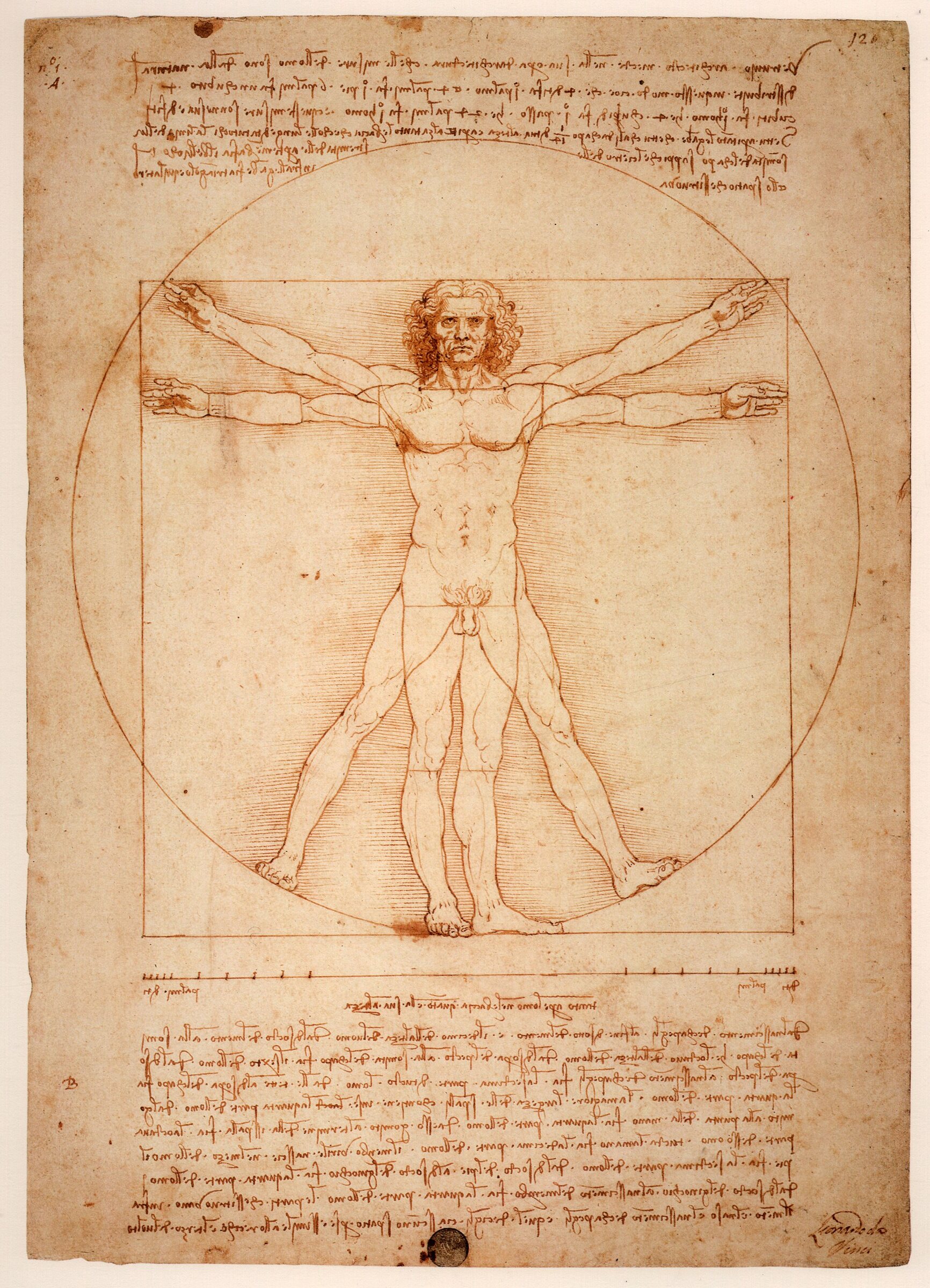
Vitruvian Man
Leonardo sets the human body inside a circle and square, joining anatomy, mathematics and the Renaissance search for ideal proportion. It is both an image of order and evidence of an intensely searching mind.
The drawing opened a route into the unstable border between genius and obsession. The composition began as a piano piece before being rebuilt for the full band, then returned to both forms on Nightmares.
Artwork image: public domain via Wikimedia Commons.
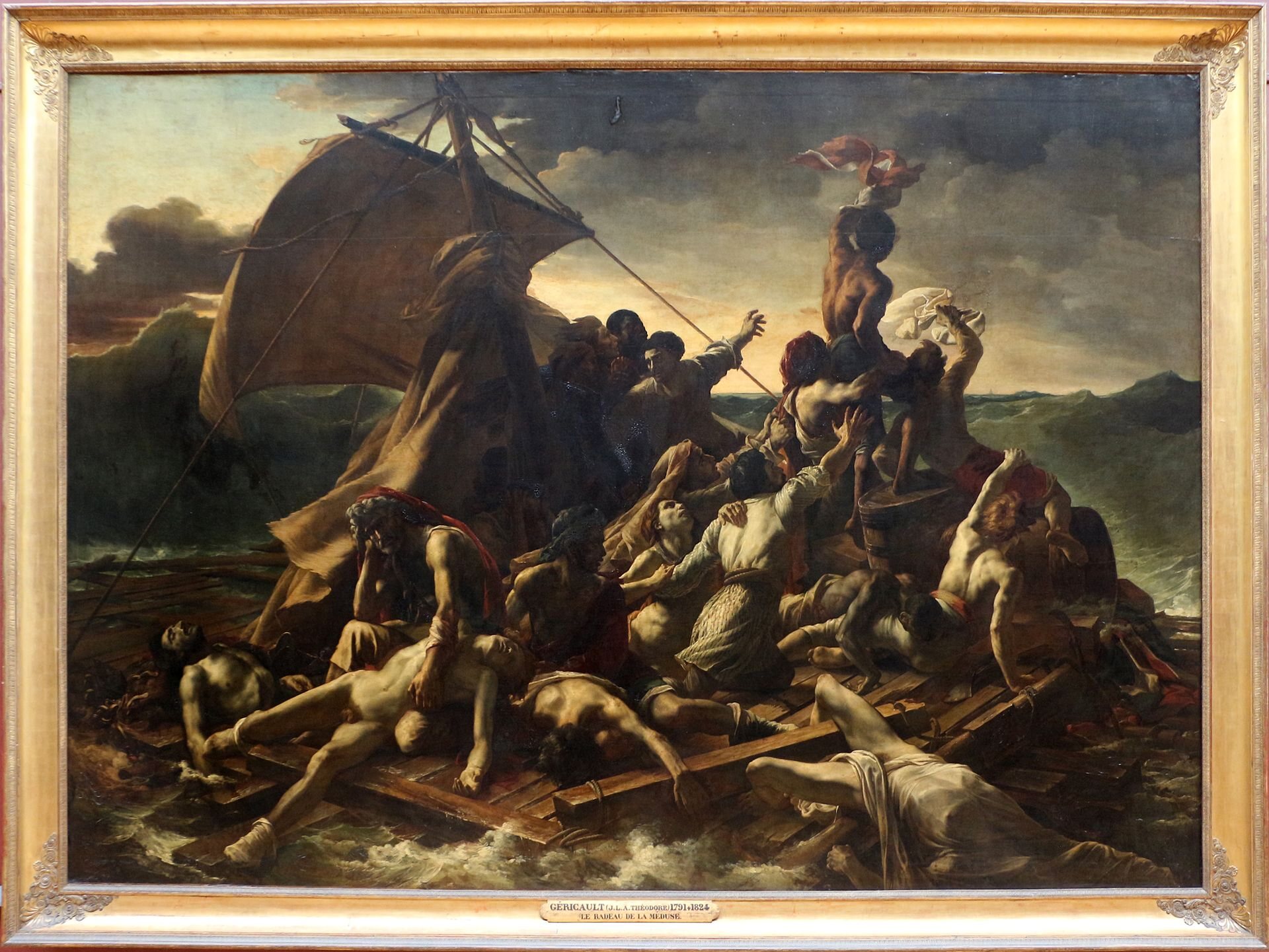
Le Radeau de la Méduse
Géricault depicts the aftermath of the wreck rather than the collision itself. Bodies rise from death and exhaustion toward a distant ship, making the entire composition move between abandonment and the last possibility of rescue.
The song follows that movement instead of retelling every event. Desperation, survival and a horizon that may still offer hope became the dramatic shape of one of the band's earliest works.
Artwork image: public-domain reproduction via Wikimedia Commons.
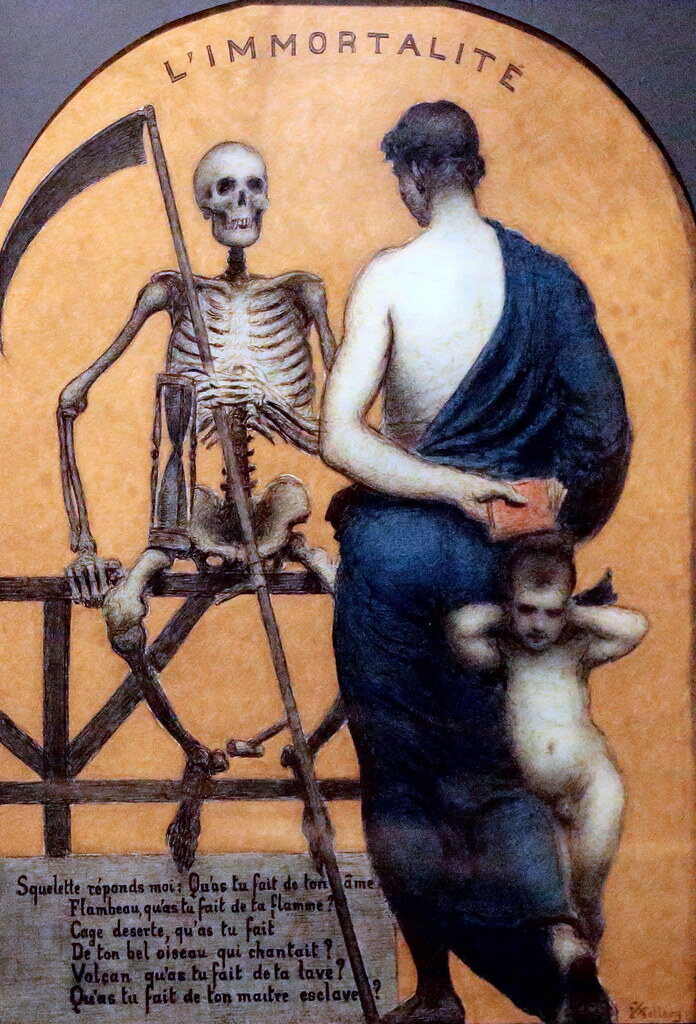
L'immortalité
Mellery combines a gold ground, a skeletal figure and lines by Victor Hugo. The poem asks what remains of soul, flame and song once the body has become an empty cage.
Image and poem were treated as one source. Their questions about the body, memory and what may survive it became a composition that later returned in both a full-band and an orchestral form.
Artwork image: public domain via Wikimedia Commons. Catalogue record: Royal Museums of Fine Arts of Belgium.

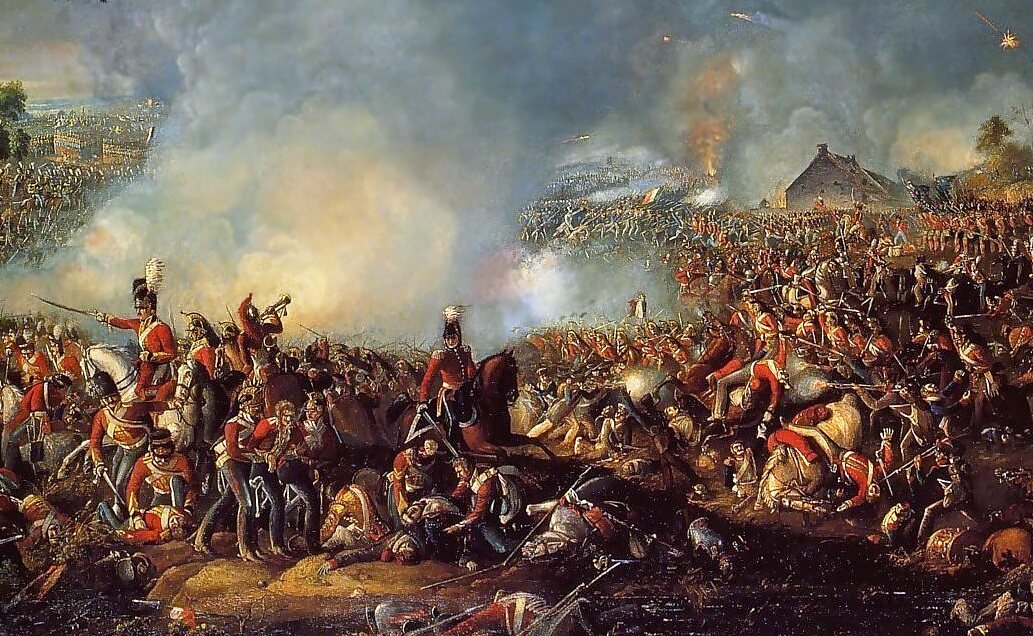
The Battle of Waterloo
Sadler spreads Waterloo across a wide field filled with cavalry, smoke and massed formations. From this distance, war appears as a system larger than any one soldier.
The first part of Ego Sum Bellum enters through the armies themselves: bodies gathered into legions and set in motion by forces beyond the individual.
Artwork image: public domain via Wikimedia Commons.

The Battle of Waterloo
The panorama records a decisive battle, yet its scale almost hides the individual deaths inside it. Smoke breaks the landscape into fragments while figures disappear into the mass.
The second part moves closer to the human experience of that field. Grandeur falls away, leaving confusion, fear and the constant presence of death.
Artwork image: public domain via Wikimedia Commons.

The Battle of Waterloo
Waterloo became an image of both ending and repetition. A single battle closes a political chapter, while the forces that produced it remain recognisable far beyond 1815.
The final part turns from the field toward the impulse behind it. Power, ambition and destruction complete a triptych in which war speaks as if it were a character of its own.
Artwork image: public domain via Wikimedia Commons.

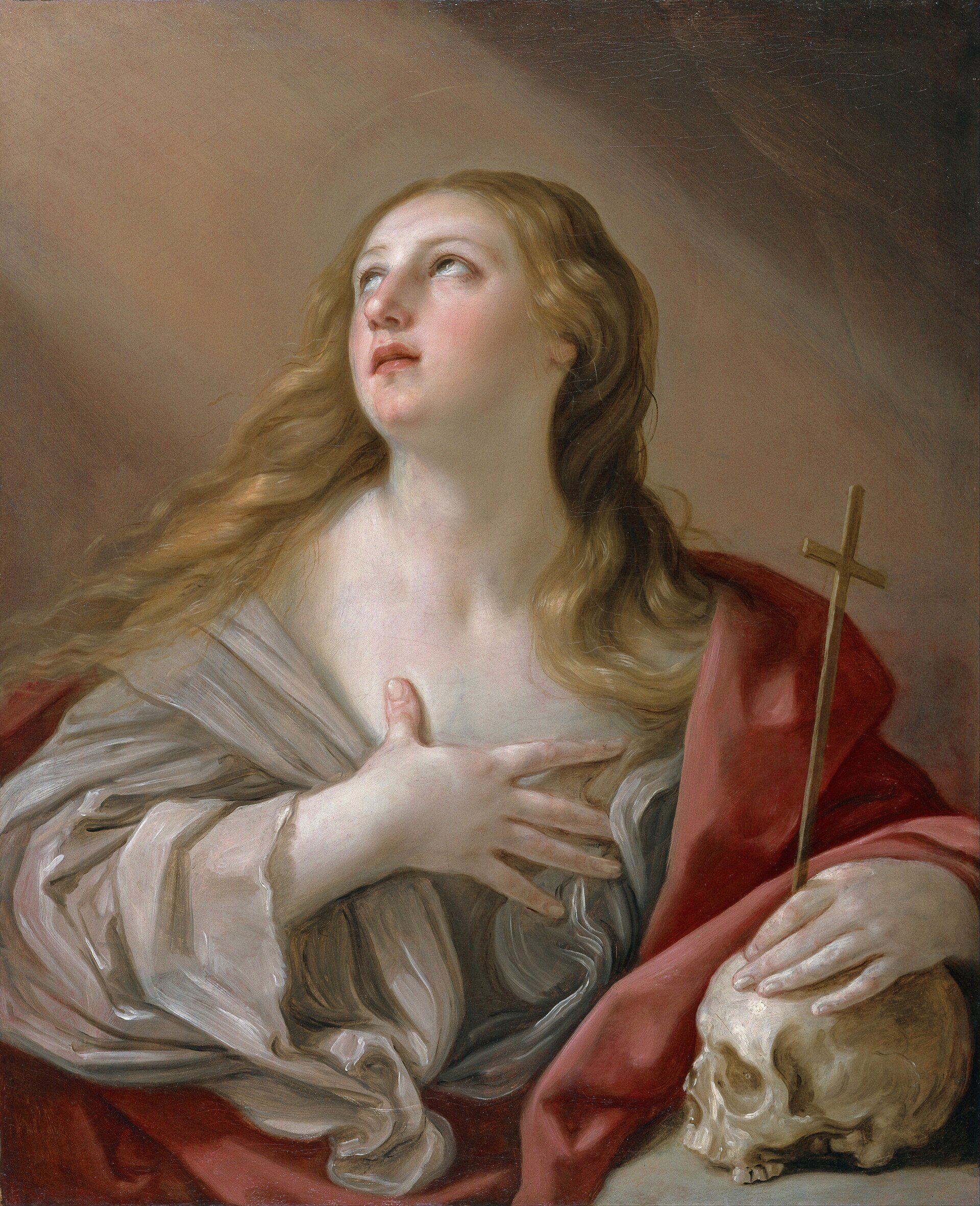
The Penitent Magdalene
Reni presents Mary Magdalene through the later tradition of the penitent sinner. Her upward gaze, the cross and the skull combine repentance, devotion and mortality in an idealised image.
The song begins with the tension inside that tradition: a woman made simultaneously sacred and sinful. It questions the labels imposed on Magdalene rather than treating the painting as a simple devotional scene.
Artwork image: CC0, courtesy of the Walters Art Museum.

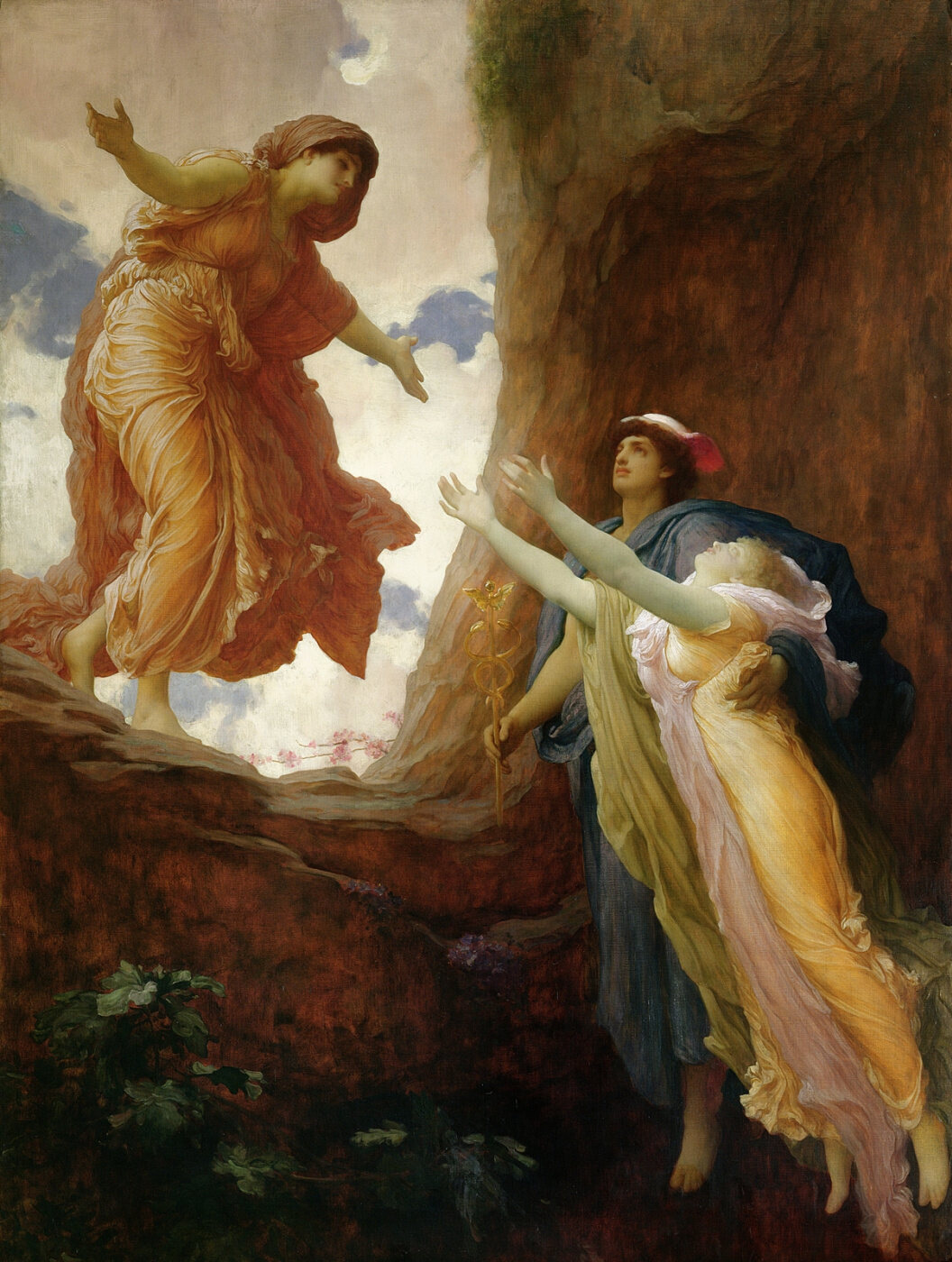
The Return of Persephone
Leighton shows the instant Persephone rises from the underworld and reaches Demeter again. The vertical composition makes her return feel physical, with darkness below and reunion above.
The myth offers no uncomplicated rescue. Persephone belongs to both worlds, making return and loss part of the same cycle. The song takes that division as its centre.
Artwork image: public domain via Wikimedia Commons.
De Bokkenrijder
Peerboom's painting draws on the nocturnal Bokkenrijder legend, in which riders were said to cross the sky on goats allied with the devil. The work remains under copyright and is therefore not reproduced here.
The image became an entrance into a world governed by dusk, superstition and approaching danger. The song concentrates on that atmosphere rather than documenting the historical gangs behind the legend.
Harry Peerboom's source painting is identified for context only and is not reproduced.
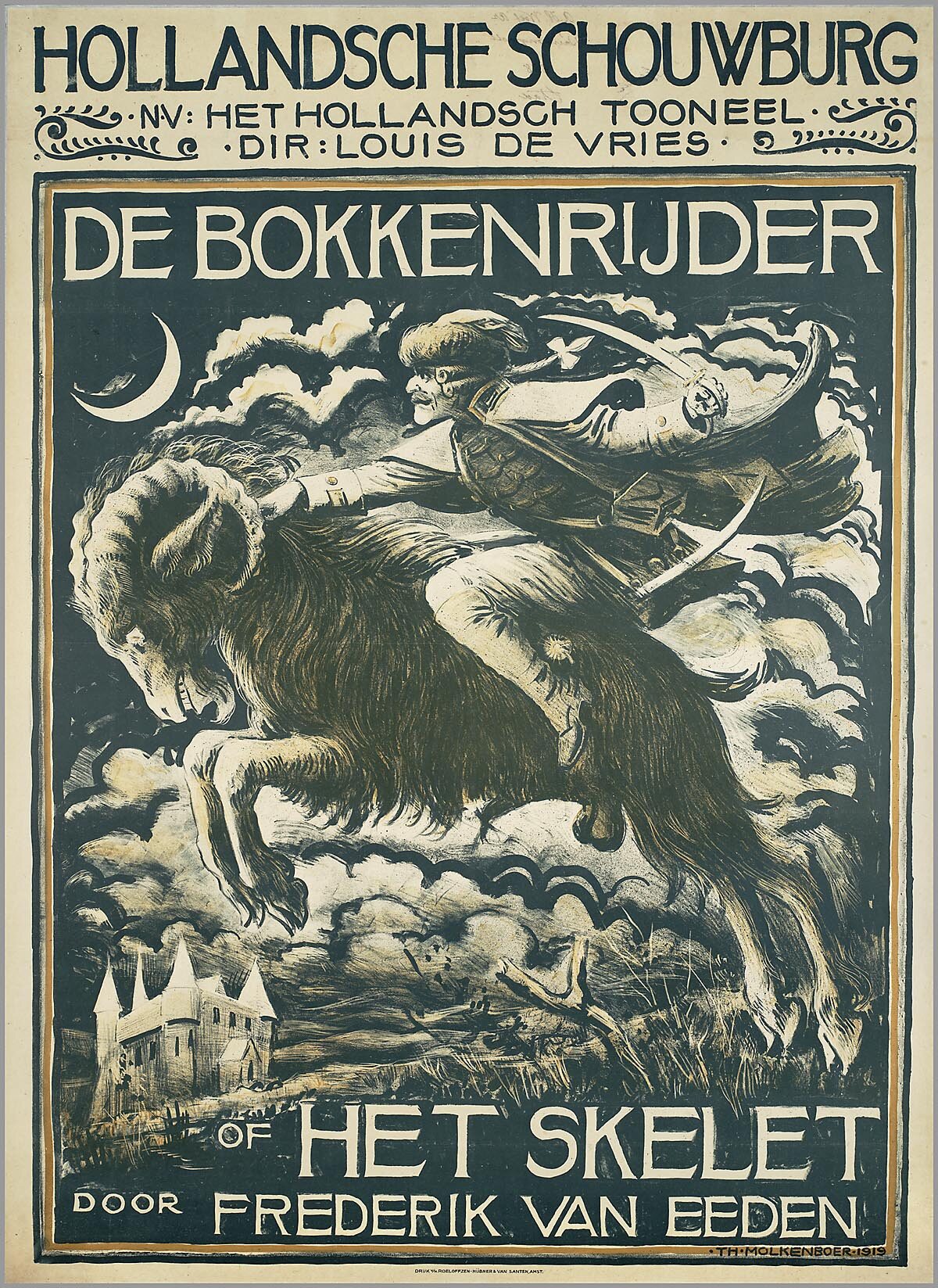
Historical context imageThe Bokkenrijders legend
The Bokkenrijders were remembered as eighteenth-century gangs and transformed by folklore into riders who travelled through the night on flying goats. History and later myth have become almost impossible to separate.
The song uses that collision of crime, fear and supernatural storytelling. The poster shown here is a historical context image, not the single visual source of the composition.
Context image: Theo Molkenboer, De Bokkenrijder of het skelet, 1919. Public domain via Wikimedia Commons.

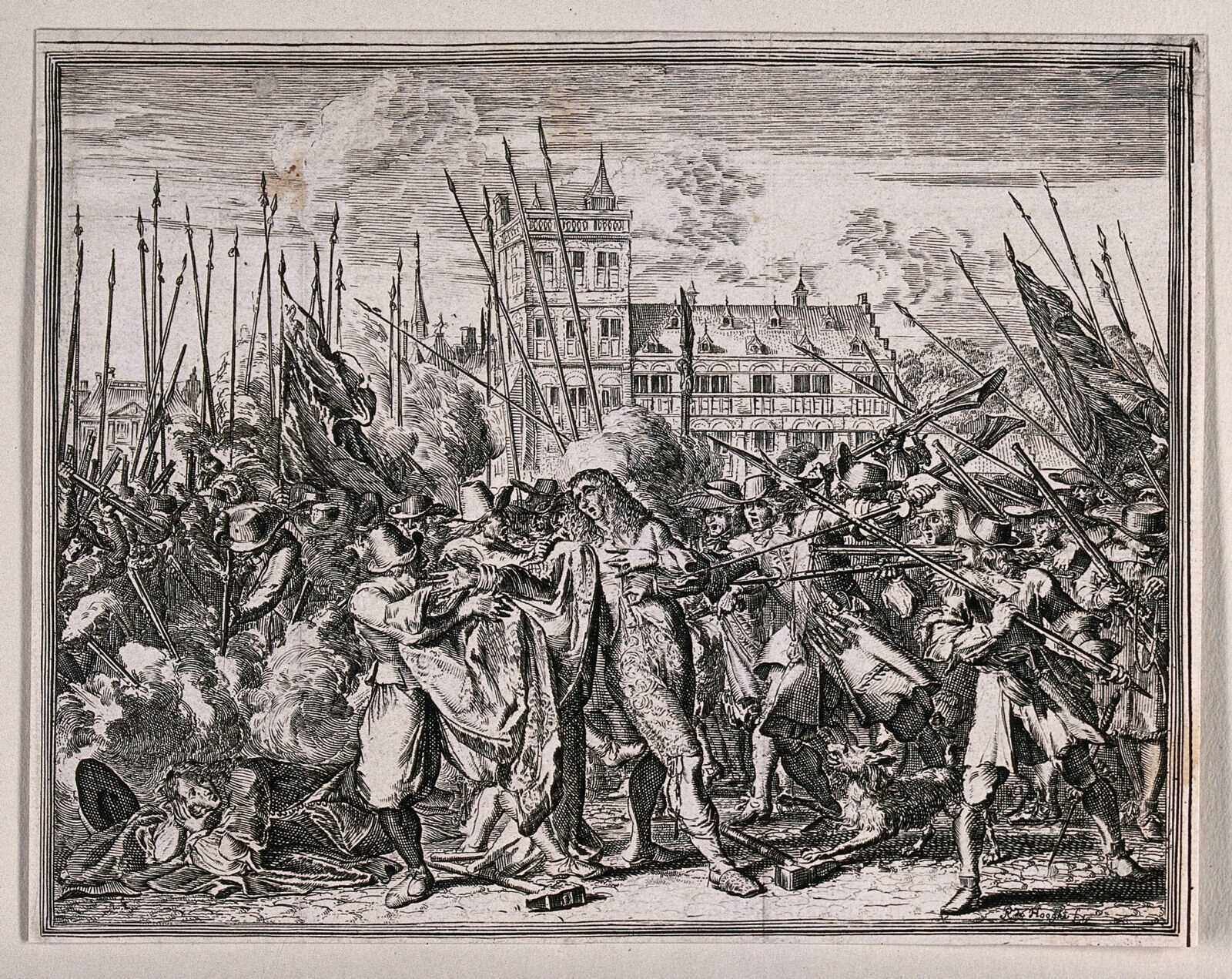
The Murder of the De Witt Brothers
De Hooghe records the public murder of Johan and Cornelis de Witt during the Dutch Rampjaar. The dense crowd, weapons and repeated acts of violence turn the print into both news image and political memory.
The song enters Dutch history through the brutality of the image rather than through a heroic portrait. Its words draw the political event back toward the people trapped inside it.
Artwork image: open image from the Wellcome Collection.
Il trovatore (The Troubadour)
De Chirico places a mannequin-like figure in an emptied architectural world. Perspective, shadow and familiar objects remain, yet the scene feels suspended outside ordinary time.
The work suggested existence as a space one can occupy without fully belonging to it. The song follows that estrangement, using the painting's silence and artificial figure as its starting point.
Artwork record: Museum Boijmans Van Beuningen. The painting is not reproduced because it remains under copyright.

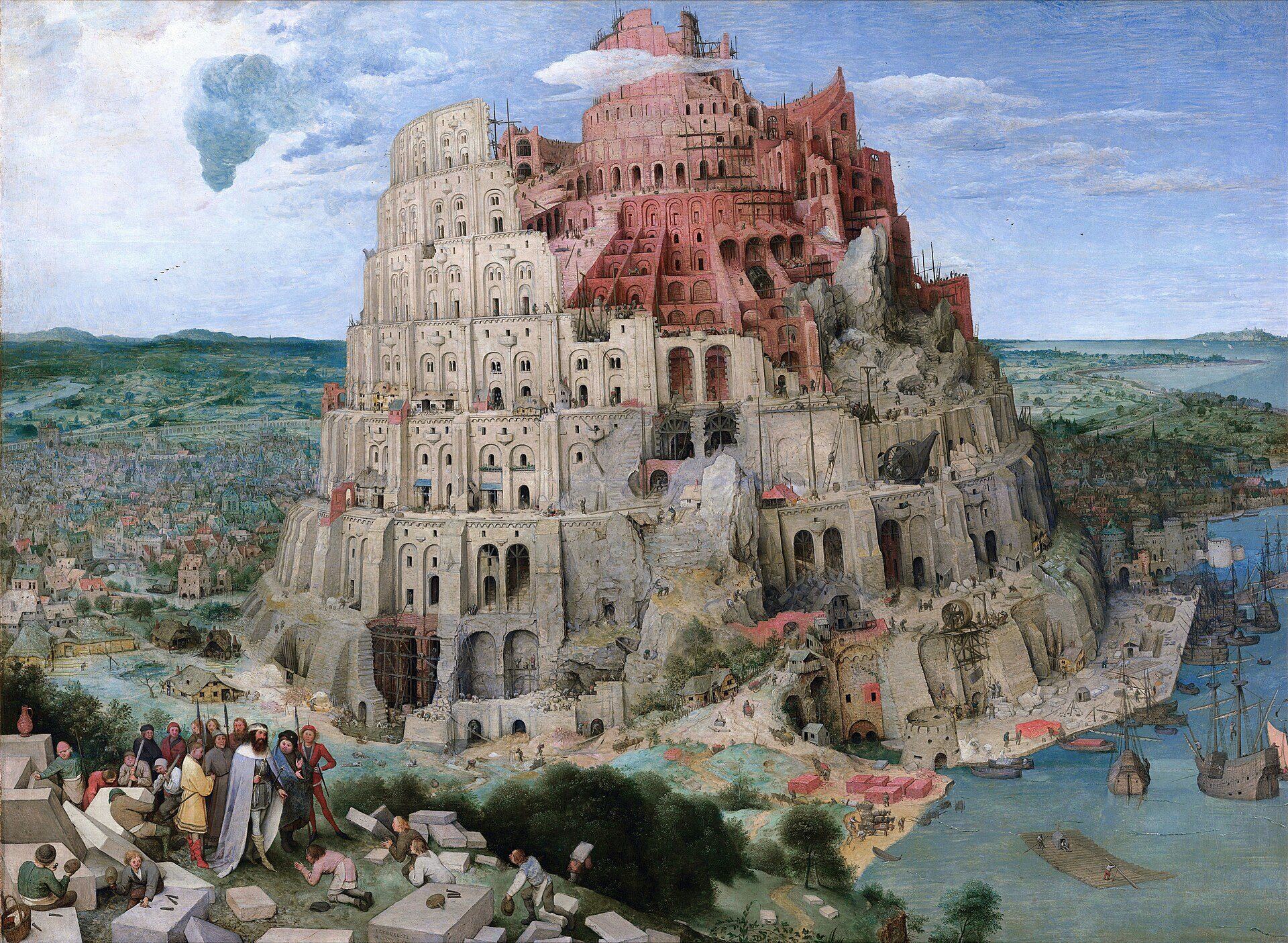
The Tower of Babel
Bruegel's tower is monumental and already unstable. Thousands of small acts of construction build an impossible ambition whose failure is visible before the structure is complete.
Created for the Art Rocks competition, the song looks beyond the biblical episode toward the people who inherit its pattern. Ambition, division and collapse become something passed from one generation to the next.
Artwork image: public domain via Wikimedia Commons.
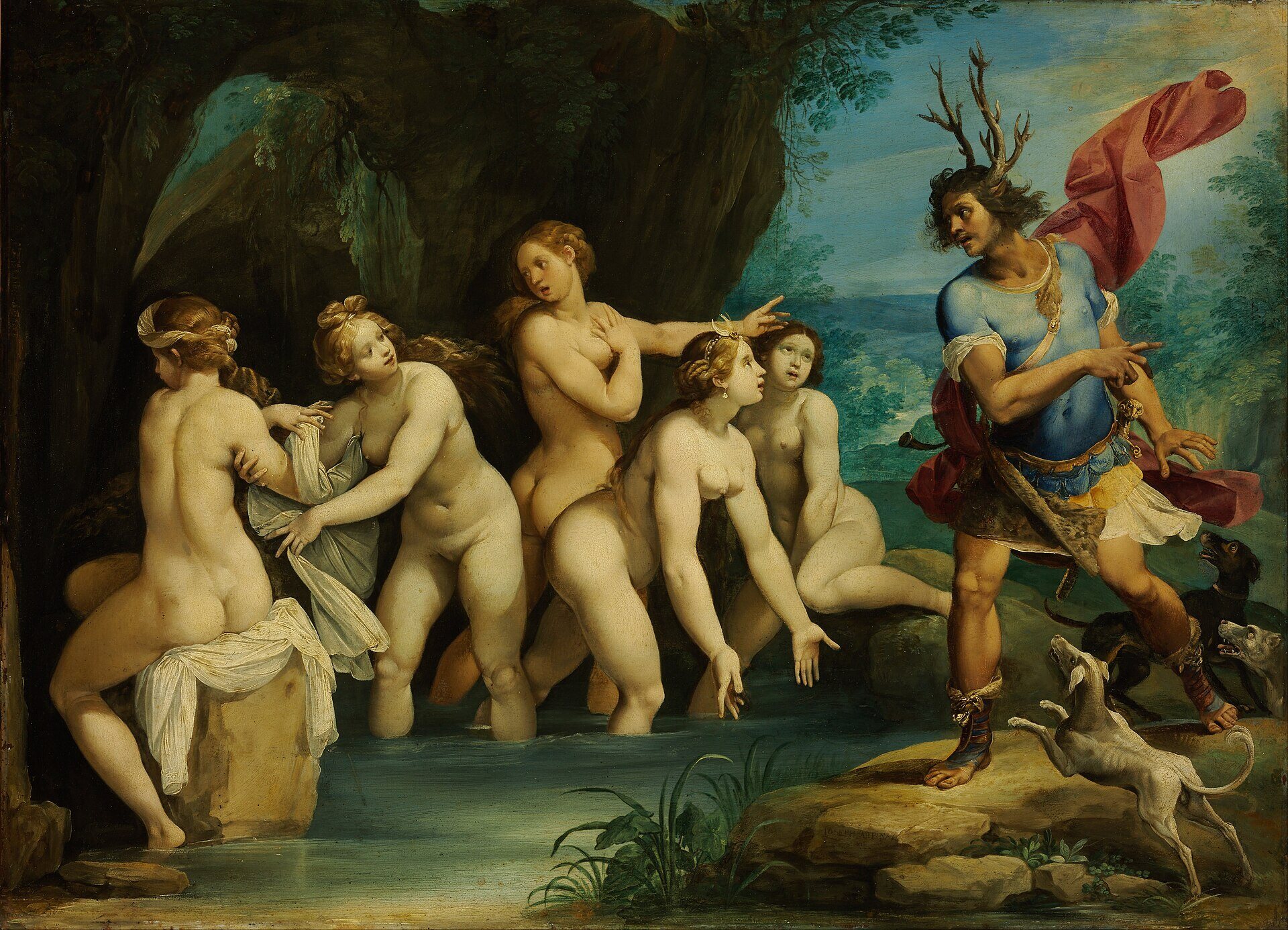
Diana and Actaeon
Actaeon accidentally sees Diana bathing. Cesari shows the instant of discovery, with the hunter already growing antlers before he will be torn apart by his own hounds.
The myth turns a brief transgression into irreversible punishment. The song follows Diana's wrath and the speed with which identity, power and control are taken from Actaeon.
Artwork image: public domain via Wikimedia Commons.
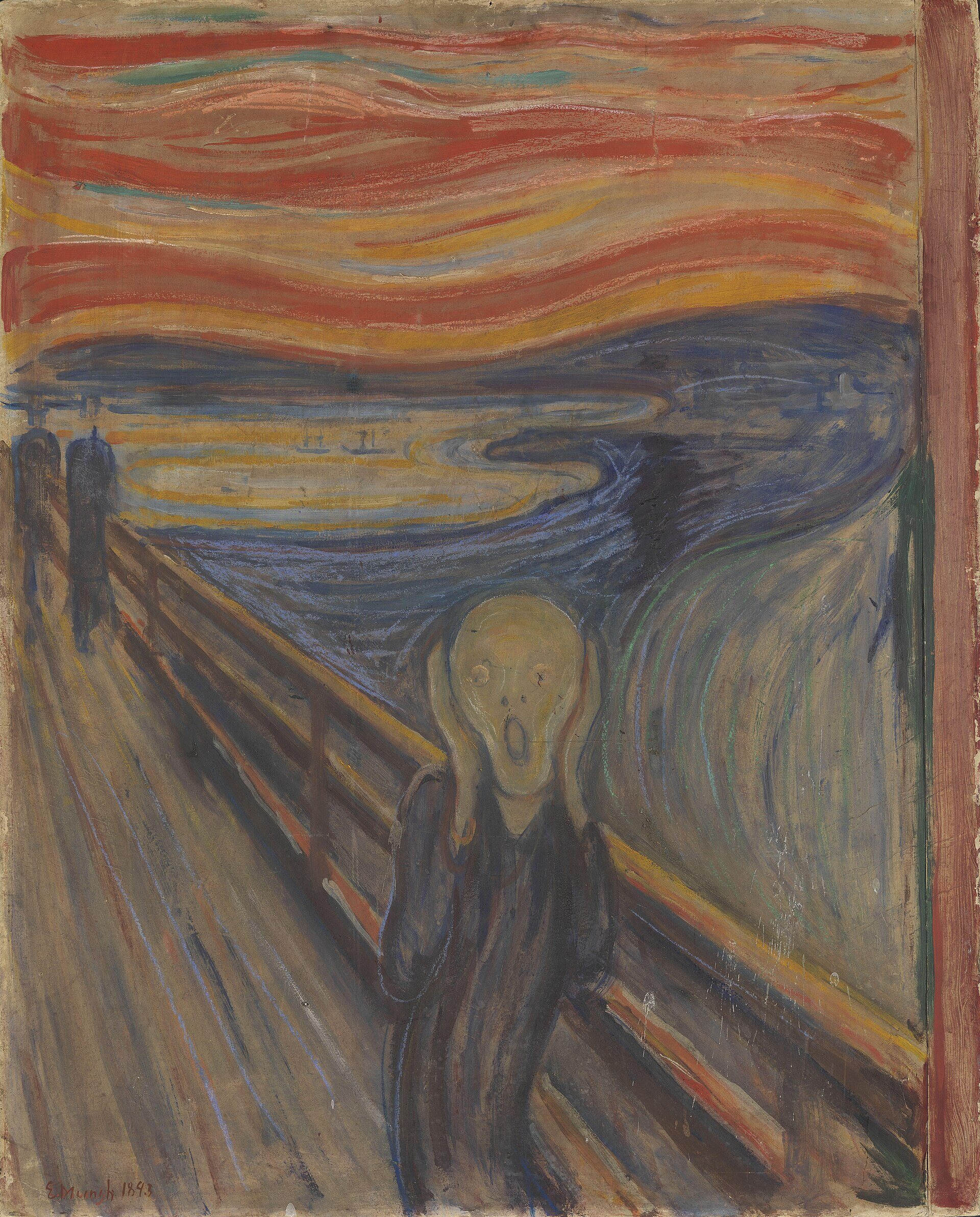
The Scream
Munch turns anxiety into landscape. The figure, sky and water share the same wavering rhythm, so the scream seems to pass through the entire world rather than come from one mouth alone.
The song begins where sound and silence meet: an inner cry that cannot be separated from its surroundings. The painting's distorted space became as important as its central figure.
Artwork image: public domain via Wikimedia Commons.
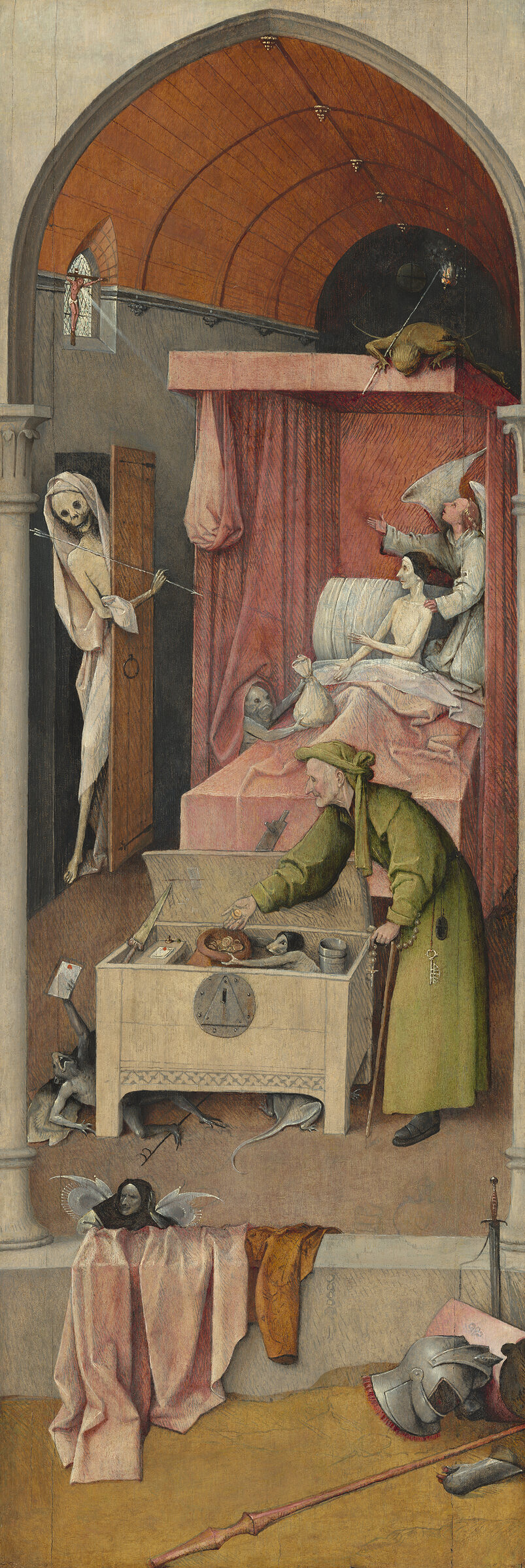
Death and the Miser
Bosch stages the final moment of a miser's life as a struggle for attention. Death enters at the door while demons, money and an angel compete around the bed. The choice between possession and salvation remains unresolved.
This was the first piece written as Pictura Poesis. The painting offered the complete proof of concept: an image with a story beneath its surface, ready to be translated into symphonic metal.
Artwork image: public domain and CC0 via Wikimedia Commons and the National Gallery of Art.